12 A Global View
“We prepare children to learn how to learn, not how to take a test.” — Pasi Sahlberg, Finnish educator and author

There is much we can learn from how other countries educate their young people because when we always do things the same way, we may not realize there may be other and better ways. Is starting kindergarten at 5 years of age the best age to start? Finland, for example, delays starting academics until age 7, offering play-based education until that time. Studying the successes and failures of other countries can help countries to consider ways to improve.
Deeper Dive
What we can learn from the educational systems of other countries:
5 Most Successful Education Systems
6 Innovative Ways Different Countries and Schools Have Dealt With Common Student Problems
Countries like Germany are well known for their split-track vocational system that connects secondary school directly with high-paying industry apprenticeships producing low youth unemployment, while Singapore produce the world’s top math students. Meanwhile, Canada is recognized for its equity practices, due to its centralized support systems that successfully integrate and educate significant numbers of immigrant students. Finland’s much lauded educational system did not always produce the successful outcomes it does today. In 1968 Finland passed legislation to significantly change its system of education.
Deeper Dive
Finland’s educational transformation:
Education reform in Finland and the comprehensive school system
How do we measure success? What should we be assessing? When we take a global look, we can see that different countries design their systems to achieve different ends. Is the purpose to achieve economic success (East Asian models) or to foster democratic societies and promote individual growth (Nordic models)? A system that works in Denmark will not necessarily work in Singapore because the goals and cultural context are clearly intrinsic to each and every system. Nevertheless, using PISA scores is one way to measure school success and take a look at what is working across borders.
Pause and Ponder: Using PISA scores to evaluate school systems
What Is PISA? PISA (Programme for International Student Assessment) is an OECD-led evaluation that measures how well 15-year-old students apply their knowledge to real-world problems. The PISA test is administered every three years across more than 80 countries, assessing mathematics, science, and reading skills.
What Does PISA Measure? The PISA assessment measures applied knowledge and problem-solving skills, not curriculum-based memorization. PISA scores reflect how effectively education systems prepare students for real-world challenges beyond school.
Why PISA Matters: PISA is widely used as a benchmark for comparing how effectively education systems prepare students for real-world challenges and the modern economy.
Watch the following video from PBS Learning Media about other educational systems in the world:
Video 12.1: PBS Learning Media on Examining Other Countries Educational Systems
 QR Code for Video 12.1
For the rest of this chapter, we will rely mostly on student work! This is such an exciting aspect of using an OER text that we are able to use student-generated content. We hope you agree! What follows is the recent research by our community college students as they contrast the following school systems with the school system in the US from the following different countries:
- Mexico
- Mongolia
- Peru
- China
- Japan
- South Korea
- France
- Cuba
Mexico: A Comparative Analysis of U.S. and Mexican Education
Student Contribution: This section was written by Jack Allen, Jaese Lecuyer, Junyan Chen, and Man Cing, Portland Community College students, 2024. Used with permission.
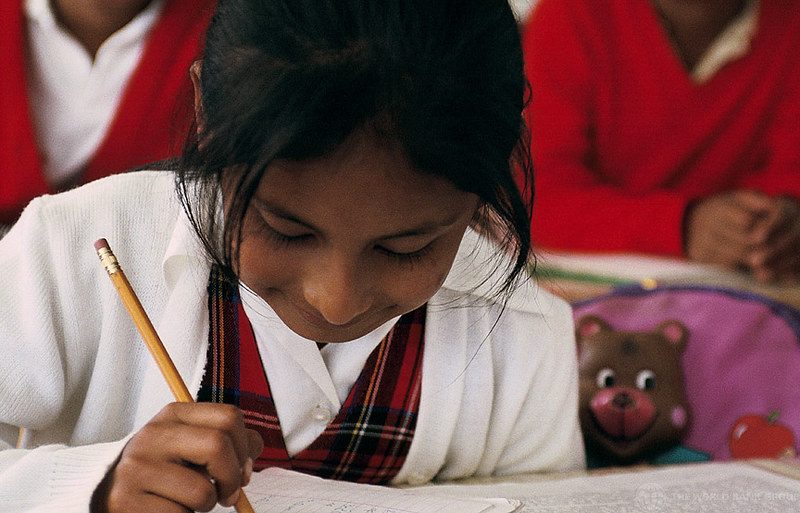
Education in the US is in a perennial and necessary process of reevaluation and reinvention. Therefore, we frequently constrain our gaze to our own efforts, and if we look elsewhere it is often to northern European countries. This is incredibly limiting, and in this essay we seek to demonstrate how the Mexican education system is facing many of the same challenges we struggle with and tackling them with approaches that we should be studying and learning from very closely.
Mexico and the United States share several commonalities in their educational systems. Both operate within democratic capitalist societies, receive funding through a combination of local, state, and federal sources, and are guided by national or state-level standards that shape what is taught in schools; however, the structure and specifics of these standards vary significantly between the two countries. Schools in the U.S. often have greater access to resources such as technology and specialized programs compared to many schools in Mexico.
While Mexico does provide instruction via the system of telesecundaria (instructional television) to help improve educational levels for students with no access to traditional schools (Rosado, Hellawell, & Zamora, 2011, p. 13), many rural communities still lack the infrastructure needed to fully support this mode of education. Both Mexico and the U.S. have the challenge of providing equitable service to a wide range of cultures and communities, with a number of minority languages present throughout despite a majority language being common. On top of that, both countries used to have religious institutions much more involved in education but have since relegated religious instruction to private schools. In Mexico this was a much more dramatic and somewhat more recent shift, and in its wake the Mexican government has had a bit more top-down control over implementation and structure than the U.S.
To add, early education in Mexico is fairly similar to that of the U.S., but a key distinction appears in the higher grades. “Secundaria” corresponds to what we consider middle school, while upper secondary education is divided into “Educación Media Superior” or “Preparatoria,” which lead to either a university track or professional licensure, respectively (Mexico Education System, n.d.). Notably, both pathways require an application process, meaning students with low academic engagement may be excluded. Graduation rates for upper secondary remain relatively low—under 50% of the population—despite gradual improvements over time (Mexico Education System, n.d.). While some may critique the application-based model in contrast to the U.S.’s more open access to high school, it may allow for more efficient use of limited resources and help tailor educational experiences to students’ specific goals.
Differences also exist in terms of population. Nearly half of Mexico’s population is under the age of 25 (Reimers, 2024), placing significant pressure on the education system to develop strategies that effectively serve its youth, especially given the cultural and regional diversity across the country. Unlike the U.S., Mexico has historically maintained a centralized education model, upheld by previous administrations. However, given Mexico’s youthful population, rural landscape, and larger Indigenous communities, ongoing reflection and reevaluation have become increasingly necessary.
What has become apparent is that despite the centralized direction, providing education is a shared responsibility between the government and states. Only 27% of the funding for public education comes from the central government, with the other 73% coming from the regional level. While government spending on primary education is very progressive (federal funds being used to benefit poorer areas to a larger extent than they contributed), in lower secondary education it is neutral, and above that the funding allocation becomes increasingly regressive.
Public spending on upper secondary and tertiary education favors non-poor families in urban areas to a high degree. (Lopez-Acevedo & Salinas, 2000) This leaves it up to local communities to pick up the tab for education beyond a middle-school level.
Additionally, states in Mexico, like the U.S., have wildly different levels of income and wealth among their populations. A 2020 economic report found that the income gap between Mexico’s richest and poorest states exceeded a 10-to-1 ratio, with a few wealthy states far above the national average and many well below it (Data México, 2020). In contrast, the U.S. shows roughly a 3-to-1 gap between its richest and poorest states, less if Kansas is excluded as an outlier. While income inequality across regional lines is a challenge both countries must wrestle with, it’s a much more profound force in Mexico. While the US averages ~10% of its citizens below the poverty line, Mexico sits at ~45% by their own metrics, with some states reaching above 70% of its population living below the threshold (Data México, 2020).
The level of poverty defines the educational relationship to a much greater degree than it ever could in the US, and the local levels of funding can cause what is provided to vary harshly. The subtle costs of facilitating a student’s education, along with the opportunity cost of an extra pair of hands in the house, means that in much of Mexico public education is an uphill battle. Further, while Mexico’s constitution guarantees the right to education, the implementation of a nationwide standardized approach has come at a cost.
For most of the 21st century, government policies have emphasized centralization, global competitiveness, efficiency, and teacher productivity, and mitigating things like teacher agency and freedom to respond to local student diversity, needs, or culture. As author Mneesha Gellman argues, state-led “processes of homogenization” are tied into policies and practices that “constrain the medium of instruction options that learners find in the classroom” (Gellman, 2019, p. 4). A one-size-fits-all model often fails to reflect or support the rich cultural and linguistic diversity of Mexico’s population. This has recently led to the “Nueva Escuela Mexicana” (NEM) established by President Andrés Manuel López Obrador’s administration.
Placed into motion in 2019 and formally implemented during the 2023-24 school year, some primary goals of the NEM are to “prioritize inclusion, equity, and cultural and linguistic diversity [and] reposition public education as a humanistic and community-centered endeavor, focusing on forming just, inclusive, and democratic societies” (Carranza et al., 2024, p. 2). For instance, in lieu of lectures, the NEM promotes project-based learning which focuses on collaboration, creativity and finding solutions to issues relevant to local communities. Also, it supports teachers in creating student centered curriculum rather than being limited by a rigid national agenda. By creating learning environments that uplift student knowledge, critical thinking and lessons both informed by and relevant to particular communities, the hope is for education to strengthen communities, honor cultural diversity and promote a sense of civic duty based in social justice. So how has the NEM fared?
According to Animal Politico (2024), initial reviews of the NEM have been mixed with a recent survey citing a lack of comprehensive teacher training as one roadblock to success; 32% said state-led training was poor or non-existent. Additionally, while a free textbook for project based learning was provided, its adoption has been mixed. While many used the resource, only 3–5% of teachers fully completed the contained lessons, some citing lack of technological support as a factor. The content of the textbook was also met with resistance by certain communities. Regarding associated monthly training sessions offered to enhance implementation, “75% of respondents indicated that they were very useful or useful” (Animal Politico, 2024). This in itself indicates a general willingness amongst educators in Mexico to seek and remain open to new approaches despite challenges. This openness about how education can serve all communities should act as a reminder to U.S. educators that reflection, reevaluation, and meaningful community input are essential to improving educational systems.
To conclude, while the U.S. has experimented with Project-Based Learning and other alternatives to the traditional classroom structure, our actual implementation of them has been few and far between. Initiatives such as Mexico’s country-wide NEM program will be instructive to learn from, and we should pay close attention to the lessons gained from such an effort so we may better shape our own practice.
Mongolia: The United States and the Mongolian Education Systems: Differences and Similarities

Student Contribution: This section was written by Lenox Morey, Odontuya Tsegmed, and Oliveria Garcia, Portland Community College students, 2024. Used with permission.
Introduction
In this chapter, we will compare and contrast the United States and the Mongolian Education Systems and discuss each in the context of respective national values and history, including foreign influence. The biggest differences that emerge are rooted in the centralization and national-level control of education in Mongolia, versus the local/state decentralized control of education in the United States.
Description of the United States Educational System
The United States educational system guarantees a free public education to all children. Free public education begins in Kindergarten, which is usually for children at age 5, and goes through Grade 12, which is usually at age 18. Compulsory education laws vary by state, but generally require school attendance until age 16. Despite the critical importance of childhood development from ages 0 – 5, there are few publicly funded options for children at these ages.
Following Kindergarten, schools are typically divided into Elementary (grades 1-5/6), Middle School or Junior High, grades 6/7-8), and High School, grades 9 – 12. The term “primary education” or primary school refers to Elementary school, and the term “secondary” education usually refers to grades 7 – 12. The academic year usually begins in late August or early September and ends in June.
After secondary education, students may choose to pursue “post-secondary education” at community colleges (which generally offer 2-year degrees, certificates, or diplomas) or 4-year undergraduate colleges and universities, which offer bachelor’s degrees. Graduate education is for terminal degrees such as master’s, doctoral, juris doctor, medical, doctor of fine arts, etc.
According to the US Census Bureau (2022), the high school completion rate is 91.1% for the country overall. In the US, the breakdown of the population by the highest degree they hold is: 8.9% have no diploma or equivalent, 42.8% with a high school diploma or equivalent, 10.5% with an associate’s (2 year) degree, 23.5% a bachelor’s degree, and 14.4% an advanced/graduate degree.
High school completion rates can be broken down by race, with 95.1% of the non-hispanic white population graduating, 90.5% of the black population, 92.9% of the asian population, and 74.2% of the hispanic population. As future educators, there is a clear call to action here to support all students in the classroom and in graduation. In general, foreign-born people are more likely to have a college education and a graduate education than native-born people. (U.S. Census Bureau, 2022)
In primary and secondary public education, grades are given as letter-grades, listed from highest to lowest as: A+, A, A−, B+, B, B−, C+, C, C−, D+, D, D−, and F. All grades A – C are considered passing, and all grades D – F are failing. Many high schools and colleges use Grade Point Averages (GPA’s), which are calculated numerically, where A = 4.0, B = 3.0, C = 2.0, D =1.0 and are cumulative for the duration of the program. Students are generally ranked by GPA in their classes (a class being all students in the same Grade, e.g. Grade 11) and the student with the highest GPA by the final year is the valedictorian and the student with the second highest GPA is the salutatorian. In some schools, GPA’s are weighted with accelerated or honors classes being weighted higher than non-honors classes.
Though free public education is available to all children in the United States, there are a variety of options available from which parents can choose; For example, public, vocational (trade-based), private, charter, magnet, and homeschooling options. While vocational schools are not the most common, there are many world-class universities located in the United States, such as Harvard University, the Massachusetts Institute of Technology (MIT), California Institute of Technology (CalTech), Stanford University, and Princeton University, to name a few. Students are able to transfer between universities by applying for transfer admission. Many students who are interested in a 4-year degree will choose to complete 2 years at a community college and then transfer to a 4-year institution.
Key Characteristics:
- Local control: Educational policy is largely managed at the state and district level, not by the federal government.
- Curriculum differences: No national curriculum (though federal funding may be contingent upon test scores or curriculum), standardized tests vary widely between states.
- Inclusive laws: Legally require the accommodation of students with disabilities
Review of the Mongolian Education System
The foundation of Mongolia’s modern education system is rooted in the education system of the former Soviet Union, formerly known as the Russian Federation. Before the 1990 Democratic Revolution, Mongolia had close ties with the Soviet Union, and the first kindergartens, schools, general secondary schools, Technical and Vocational Training Schools (TVTS’s), and universities were established with the assistance of the Soviet Union, which had a special influence on the training of teachers and the development of curricula. All education was free, and there were no private schools, kindergartens, or universities, so the selection and examination system was very strict. The literacy rate was 99%, among the people ages 15 and above; this is higher than the average youth literacy rate in other lower middle-income countries (WorldBank, 2024). In terms of educational level of the labor force, one in three employed individuals holds a tertiary (post-secondary) education diploma or degree.
During the former education system in the central planned economy of Mongolia, children aged 3-6 were required to attend primary education, students aged 7-10 were required to attend primary education, and students aged 11-16 were required to attend secondary education. All grades were subject to quarterly exams. State exams were taken in grades 4, 8, and 10. Students who graduate from grade 8 were enrolled in TVTS’s and study for 3 years to become skilled workers. Students who completed the 10th grade took the university entrance exam, competed in a limited number of places, studied for free, and after graduation were assigned to work in designated places. It was also possible to study for free in countries such as the USSR, Germany, Czechoslovakia, Ukraine, and Bulgaria.
However, since the transition from a centrally planned economic system to a market economic system, in 1996, the first private universities were established, and state-owned universities became fee-paying and switched to the credit system. Since 2000, the first private high schools, middle schools, and elementary schools have been established, and the Education Law has created a legal framework for private schools to provide educational services. Also, the 10-year school system was changed to 12 years, allowing children to enter the first grade at the age of 6.
In the 2008/2009 school year, the 12-year schooling system was introduced, lowering the school entrance age from 7 to 6. This was only four years after the first age reduction, from 8 to 7 years. (Dyer, 2025). The change from a 10 year to 12-year schooling system enables Mongolian high school graduates to transfer to universities in developed countries. With the transition away from the Soviet Union socialist society towards a market (capitalist) society, the curriculum has changed dramatically. Instead of only Russian being compulsory in grades 4-10, it has become possible to study many foreign languages, including English, Chinese, and Japanese.
The education system has also undergone a dramatic transformation, with the establishment of schools with advanced training in mathematics and foreign languages, as well as private and public schools with international programs. “From 1995, within the Education for All (EFA) framework, education reforms aimed to refresh approaches and pedagogy, to transform education planning to focus on outputs instead of inputs, and to ensure quality assurance.
This led directly to configuring a new system of Education for All which prioritized education access, quality, relevance and equity. It was during this period, when the formal education sector struggled to respond to changing education needs, that the need to establish a more flexible educational system was recognized (Yembuu,2009). Non-formal education was made legal in the 1991 Law on Education, subsequently integrated in the 2006–2015 Education Master Plan and associated programming, and continues to form part of the overall national education system” (Dyer, 2020).
Currently In Mongolia, the academic year begins in September and ends in June, and the official primary school entrance age is 6. The system is structured so that the primary school cycle lasts 5 years, lower secondary lasts 4 years, and upper secondary lasts 3 years. The central state administrative body for implementing the Education Law is the Ministry of Education and Science of Mongolia, and the implementing agency is the General Department of Education. There is a unit called the Department of Education and Science in each city, province, and district. School principals are appointed by this unit and enter into contracts with local governments and work in accordance with the contract. Recently, due to the shortage of teachers and the increase in the number of children, the state has legislated to finance the tuition fees of students enrolled in teacher training schools.
The core curriculum, textbooks, handbooks for primary, secondary, and vocational and technical education are developed and approved with the participation of relevant organizations such as the National Institute of Educational Research, the Ministry of Education and Science, and the General Department of Education. International organizations in countries such as Japan and Germany also provide support, conduct joint research, and provide recommendations. For instance, within the scope of the program “Supporting Mongolia’s technical and vocational education and training (TVET) reform”, the German Technical Cooperation Organization (GIZ) provides consultancy to develop and introduce vocational education and training programmes. (Deutsche Gesellschaft für Internationale Zusammenarbeit [GIZ], 2024)
Policies such as equality and accessibility, taking into account different needs, ensuring sustainable development, introducing community-based learning, providing mathematics, natural sciences, art, aesthetics, and moral education, and implementing application-based life preparation programs are adhered to in the curriculum and in extracurricular activities.
In the field of technical and vocational education, the German and Japanese education systems are being adopted. For example, Kosen-type colleges of technology have been established, where students who have graduated from high school can graduate with a bachelor’s degree in engineering, and students can transfer to Japanese universities of technology to continue their studies at the master’s and doctoral levels. (Japan International Cooperation Agency, 2017)
The Education Law, amended in 2023, created the legal framework for the establishment of vocational high schools. This is an important step in developing a system of specialized high schools that provide vocational orientations such as trade, technology, business, and agriculture, in addition to general education schools. The programs of universities and schools are approved by the National Council for Accreditation of Higher Education and are updated every 5 years.
As emphasized by Dyer (2020) and according to various assessments, Mongolia has achieved remarkable success in education service delivery within a challenging environment, resulting in impressively high participation rates in education all levels (Mongolian Institute for Educational Research [MIER], 2019) This can be attributed to the significant social and economic value that Mongolian society places on education, alongside the recent private sector providers. However, despite these notable progress in education through traditional metrics, the system is reportedly under considerable strain-some stakeholders have described it as a ‘crisis’, while others view it as a ‘crossroads’. Currently the education system faces several challenges, with urgent need to enhance quality of education at all levels and to align skills with labor market demands being the most frequently highlighted issues.
Key Characteristics:
- National control: Educational policy is largely managed at the state and district level, not by the federal government.
- Curriculum and testing is centralized: There are national requirements for curriculum and standardized tests are administered quarterly. Students in grades 5, 9, and 12 in all schools take state tests based on content approved by the Educational Assessment Center, and students in other grades take grade promotion exams.
- Inclusive laws: Legally require the accommodation of students with disabilities
(Government of Mongolia, 2016).
Similarities between the Mongolian and United States Education Systems:
In both systems, public schools are free and all children have a right to attend school. The timeline of education is similar between the countries – 12 years grade-school, vocational, and university programs are of similar duration. Universities have a credit system. Private schools and vocational schools are allowed in various forms, but neither are the most popular or common option for education. Elementary schools usually do not give letter grades, but middle and high schools do. Both are now situated within a market economy and post-secondary education is increasingly expensive.
There is a strong rural-urban divide in both countries. Herding and nomadic lifestyles are part of the indigenous heritage of the Mongolian peoples and of native North-Americans. The United States now has been strongly shaped by European colonization that started in the 17th century. Mongolia experienced significant foreign influence from the Qing dynasty in China in the 17th through early 20th century; Kang, 2022) and then the Soviet Union in the middle-late 20th century (WENR, 2022). In both countries, rural areas tend to be more indigenous and herding or agrarian and people tend toward more functional skill attainment; wealthy urban people tend to have more resources and people tend towards higher educational attainment; and poverty-stricken urban people tend to face overcrowded schools and systemic barriers that hinder long-term academic achievement (Reardon, 2019; WENR, 2022)
Differences between the Mongolian Education System and the United States Education System:
Mongolian education is strongly centralized and rigorous, which is a lingering effect of its affiliation as a socialist state with the Soviet Union. The United States is a country with very strong values in individualism. Each of the 50 states set their own educational goals, standards, and testing practices and the curriculum is set at the district (local) level and sometimes overseen by publicly elected officials on school boards.
The highest authority for education in Mongolia, the Ministry of Education and Science, implements the same policies in cities, provinces, and districts and provides unified management for schools and kindergartens. Again due to the influences of the Soviet Union, the Mongolian curriculum is more centralized and more rigorous in math, science, and Russian than the content of American public schools. Graduates of the 12th grade are required to take the Mongolian language and writing exam nationwide, which is not part of the American system. After that, Mongolian students take the General Entrance Exam in their chosen subject and pass the university’s threshold score, which qualifies them for admission to that university. This is again different from the American system of university entrance, which varies widely and is controlled by the admissions staff of a given university.
Values, Challenges, and the Future of Education in Mongolia and in the U.S.
The national vision of a knowledge-based society and a skillful Mongol is elaborated in relation to five objectives for education and training (Government of Mongolia, Ministry of Education, Culture, Science and Sports, 2020), and the objectives for education in Mongolia include:
- Pre-school Enrollment: ensure every child is enrolled in pre-school
- General education improvement: raise general education standards to international levels, improve PISA scores, equip schools, reduce two-shift schools by 50%, and limit class sizes to 20.
- Vocational Training Enhancement: Improve vocational education to meet workforce demands and equip graduates with strong professional skills by 2026-2030.
- Tertiary Education Advancement: develop a tertiary system aligned with sustainable development goals to produce competitive graduates by 2026-2030.
- Science and Industry Coordination: Develop a knowledge-based society by increasing funding for science, technology, and research to 3% of GDP by 2026-2030.
Unfortunately, there is no similar long-range planning document for the United States vision on education – both because education is de-centralized and because the Department of Education is currently being dismantled by the Executive Branch of the United States (Trump, 2025). A report was released in 2018 with a 5-year plan for STEM literacy (Happer, 2018), but the primary source document is no longer available from whitehouse.gov (Accessed July 31, 2025). The 5-year plan outlined by the United States Government in 2018 was to increase STEM literacy for all students to help them adapt to the rapidly changing technological environment.
There are many challenges to the quality of education in the United States. Funding for K-12 schools often depends on local (district and state level) property and income taxes and tax-levies. This leads to great economic disparities, as areas that are predominantly economically well-off have well-funded schools, and poverty-stricken areas have less funding and more teacher shortages. Additionally, the market economy of the United States has led to prohibitively high costs for post-secondary education. Standardized tests in the United States are criticized for narrowing curriculum, and the scores on these state-administered standardized tests have gone down over time, particularly during the recent COVID-19 pandemic (Kuhfeld & Lewis, 2025). The consequences of this educational gap are far-reaching, impacting both the economy and the prospects of American workers.
Conclusion
In conclusion, both the United States and Mongolia have 12-grade free public education and guarantee access to all students, including those with disabilities. Both countries now have a market economy and there are many options available to students and families, including the free public education, private schools, and vocational education, though homeschooling is not a valid option in Mongolia.
Mongolia has a centralized education system that is government controlled, has many standardized tests and requires passing these exams for entrance into University and for other achievements. The curriculum (and its emphasis on rigorous math, science, and technology education) is heavily influenced by the alignment with the Soviet Union in the mid- and late- 20th century, but since ~2000, the country has been in a market economy and has aligned its education system more closely with those of Germany and Japan. Students who wish to pursue graduate studies can transfer to Japanese Universities after their bachelor’s degree.
The United States has a decentralized education system that is mostly run at the state level, though some federal funding and direction is available. Schools in the U.S. are funded geographically by taxes, which can lead to strong economic disparities. However, for those with means, the U.S. has world-class universities and fantastic educational opportunities across all fields.
PERU: Two Systems, One Goal
Student Contribution: This section was written by Rachel Stark, Portland Community College student, 2024. Used with permission.
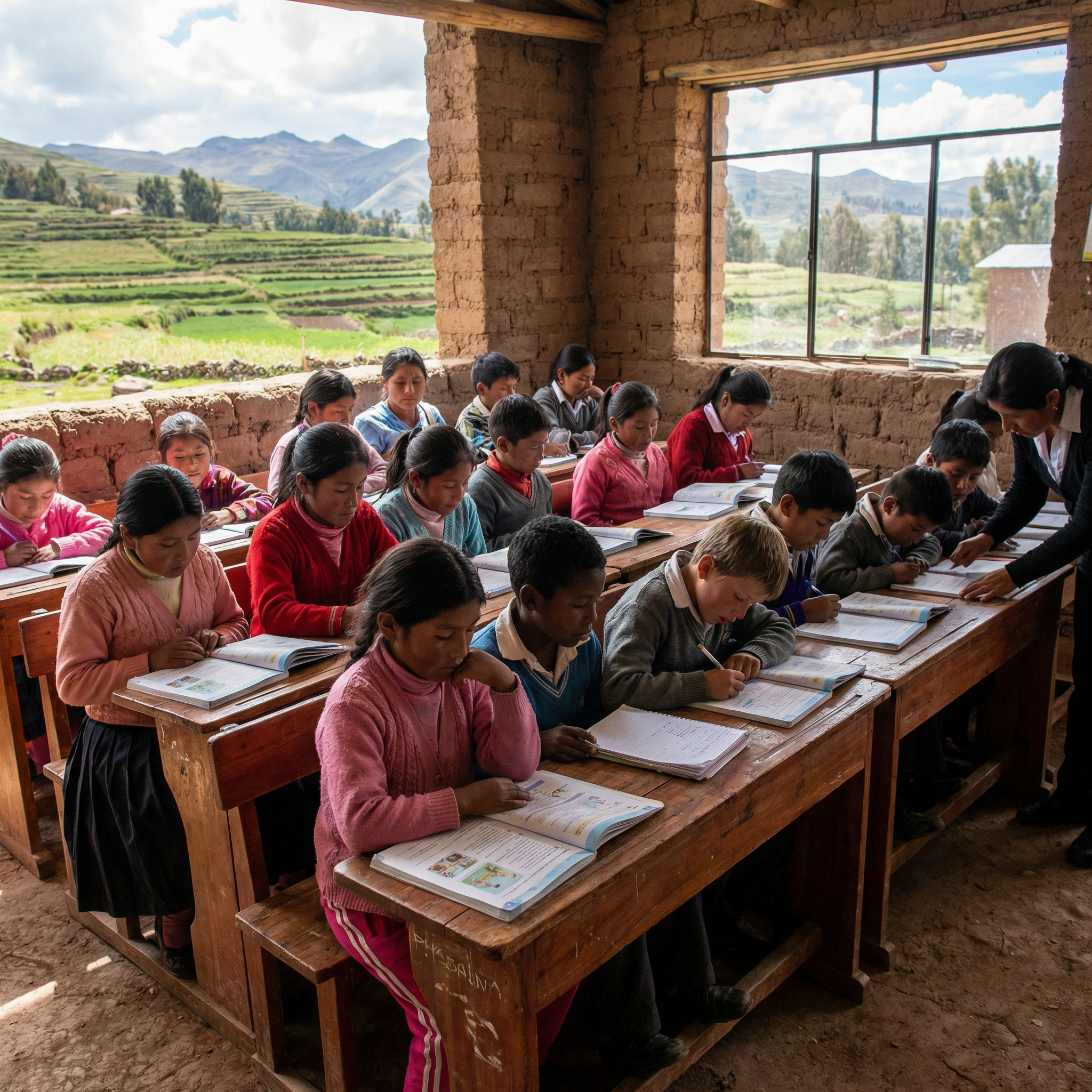
Education systems are a reflection of a nation’s values, history, and aspirations. In both Peru and the United States, schools have served not only as places of learning but also as tools for shaping national identity and reinforcing social hierarchies. Rooted in colonial legacies and marked by ongoing reform efforts, both countries have made significant strides toward educational access and equity – yet continue to struggle with persistent inequalities, particularly for historically marginalized groups. By examining the historical development, pedagogical strategies, dominant narratives, and assessment practices of the Peruvian and U.S. education systems, it becomes clear that while both aim to promote inclusion and academic excellence, structural challenges and cultural contexts deeply influence how education is delivered and whom it benefits.
Background
Peru’s colonial education system was dominated by the Catholic Church and catered almost exclusively to the Spanish elite, focusing on religious and classical studies. Indigenous, African, and Mestizo populations were largely excluded (Ramírez, 2022). Education served not only intellectual goals but also social control (Guibovich Pérez, 2016). After gaining independence in 1821, early leaders sought reform, but efforts were hindered by limited access, entrenched social hierarchies, and political instability (Espinoza Ruiz, 2013). In recent decades, Peru has expanded access to education, particularly at the primary and secondary levels.
Reforms have emphasized inclusion, teacher training, and educational equity, although disparities remain, particularly in rural and Indigenous communities (UNESCO, 2022; Ramírez, 2022). In the United States, education in the colonial era was shaped by religious influence, with limited access for children from low-income or rural backgrounds (Kaestle, 1983). The 19th-century common school movement promoted free public education, but inequities persisted for African American, Indigenous, and immigrant students (Lemann, 2000). The 1954 Brown v. The Board of Education ruling marked progress in desegregation, yet the fight for racial equity continues (Orfield & Lee, 2007). Recent reforms, such as “No Child Left Behind” and the “Every Student Succeeds Act,” focus on accountability and standardized outcomes. Alternative education models and debates over privatization have further diversified the U.S. educational landscape (Ravitch, 2010).
Pedagogical Strategies
In the United States, there is a growing movement towards a student-centered learning model. This means students are encouraged to engage in discussions, ask questions, collaborate with peers, and apply what they learn through projects and real-world problem solving. The goal is for the teachers to serve as mentors that provide the learning structure and support needed for students to navigate challenges that are meaningful and encourage their ability to be lifelong learners, critical thinkers, and problem-solvers. Moreover, technology plays a major role in how students access and share information, with many classrooms incorporating digital tools, learning platforms, and individualized learning programs. Currently, this learning model is feasible in well-resourced schools.
In contrast, the Peruvian education system has historically relied on a more traditional, teacher-centered approach. Religion is incorporated into education during the primary years and workforce studies in their secondary years. Students often learn by memorizing facts and following direct instruction. While Peru’s Ministry of Education has made efforts to move toward a competency based model that encourages practical learning and critical thinking, implementation is inconsistent. Across Peru, internet accessibility and access to technology is limited; and can also vary drastically within the metropolitan area of Lima. In rural or indigenous areas, knowledge acquisition challenges are also amplified by the language barriers and the significantly under-resourced schools. Students are taught in Spanish thereby creating additional obstacles in comprehension and learning for students that are native speakers of another language (i.e. Quechua or Aymara).
Despite these differences, both countries are working toward more inclusive and equitable education systems. In the U.S., the focus is increasingly on differentiated instruction and culturally responsive teaching. In Peru, national reforms are pushing for intercultural education and improved access, though there is still a long way to go in bridging the urban and rural education gap.
Dominant Narratives
Within any education system, there are many dominant narratives that simultaneously influence what students are taught as well as how they are supported and assessed. For instance, the U.S. narratives are deeply rooted in a long history of systemic racism. Despite various policies implemented to curb racism, it continues to influence educational practices today. One of the most pervasive aspects of this narrative is the idea that whiteness is the norm.
School culture, curriculum, and behavior expectations are often centered around White, middle-class values, while other cultural norms are seen as inferior or problematic. Students of color – especially Black, Latino, and Indigenous students – are frequently viewed through a deficit lens, where educators focus on what they supposedly lack rather than the strengths they bring to the classroom. Additionally, the dominant belief in meritocracy ignores the impact of racism, poverty, and school segregation on educational access and outcomes. Curriculum often further reinforce these narratives by prioritizing white historical figures and perspectives, minimizing or erasing the contributions and experiences of people of color.
Similarly, Peru’s education system is shaped by the belief that Spanish-speaking, urban and Westernized culture is superior. Indigenous languages and identities are marginalized or deemed inferior. This narrative positions schooling not only as a resource for learning, but rather a process for assimilation into a modern national identity that is centered on Whiteness, Catholicism, and Spanish fluency. Schools enforce norms that encourage indigenous children to abandon their clothing, languages and customs. Indigenous families comply with the assimilation since they believe that Spanish fluency is necessary for better jobs and upward mobility, even if this erodes their cultural identity.
Within Peru, meritocratic values also promote the idea that hard work and individual effort lead to success, yet this ignores the inequities that rural and indigenous communities encounter in regards to their geography, their class and their native language. In the late-1980s, the Peruvian government implemented policies to introduce bilingual and intercultural education, particularly in the Andean regions. However, these policies are continuously challenged by the lack of resources, proper teacher training and shifts in political priorities.
Both the Peruvian and U.S. education systems reinforce a dominant cultural identity through schooling, often marginalizing students who don’t fit that mold. They share a belief in individualism and standardized achievement as keys to success. However, Peru’s narrative is rooted in post-colonial assimilation of indigenous peoples, while the U.S. narrative is shaped by racialized hierarchies and systemic inequality among diverse groups. Both systems require ongoing work to dismantle these narratives and build equitable, culturally sustaining education for all learners.
Testing and Assessment
Both the U.S. and Peru emphasize standardized testing as a tool for evaluating student learning and school performance. In both countries, assessments are used to inform educational policy, track academic progress, and identify learning gaps. Standardized tests are typically administered at key stages, like the end of primary or secondary school. These assessments typically focus on core subjects and are influenced by international frameworks like PISA, which also examine students’ social-emotional well-being and school climate. Both countries share a commitment to using assessments to monitor educational quality and drive improvements. The U.S. model reflects a more decentralized, diverse approach, and Peru follows a more unified, centrally managed system.
Key differences lie in system structure. In the United States, education is decentralized, and the states determine their own standards and testing systems. Federal laws – such as the Every Student Succeeds Act (2015) – mandates testing to ensure all students have access to a high-quality education while shifting the accountability to the states to allow them the flexibility in developing a system that best works for them. On the other hand, Peru has a centralized education system, and the Ministry of Education oversees national assessments like the Evaluación Censal de Estudiantes (ECE), which tests students at specific grades in math and reading. In Peru, students also have grade-level exit exams which must be passed to advance to the next grade.
Conclusion
Education in both Peru and the United States reflects historical legacies and current social dynamics. Though both systems have evolved and made progress toward inclusivity, enduring inequalities shaped by colonialism, race, language, and geography continue to affect students’ experiences and outcomes. Pedagogical approaches, cultural narratives, and assessment systems all reflect broader issues of power and identity. While the two countries differ in governance and resources, they share a critical need: to build education systems that value diverse ways of knowing and foster meaningful, equitable learning for all students.
CHINA: Compare and Contrast: Teaching Strategies
Student Contribution: This section was written by Cathy Nguyen, Portland Community College student, 2024. Used with permission.

In Teaching to Transgress, bell hooks says, “To teach in a manner that respects and cares for the souls of our students is essential if we are to provide the necessary conditions where learning can most deeply and intimately begin” (hooks, 13). Teachers are successful when they actively participate in encouraging their students to think for themselves and share ideas beyond what has been provided for them.
Typically, students in the United States are taught under a system that can be considered the “banking concept of education.” According to Paolo Friere, who coined the term “banking concept of education,” this refers to an education system that emphasizes a teacher’s “bestowing of knowledge” on a student. In this education system, students do not play a role in their education, and only the teachers play the role of teaching. Values like these enrich the students’ success in learning.
Educational values, however, vary from school to schools and from country to country. The techniques that are implemented in the United States may not align with the values that are held at a school from another country. It is important for educators to seek knowledge regarding different educational techniques around the world, so that we can gain insight on which methods work best, as well as reflect on our own strengths and weaknesses. In my essay, I will be comparing and contrasting the United States and China, in terms of the origins of their modern education systems, their core education values, and success rates by looking at recent statistics.
When the common school movement was established in the United States in the 1800’s, United States education centered itself around the teaching of values, morality, obedience, respect for the law, and other similar subjects (Foundations of Education: A Collective Reimagining, 2023). During these times, the main goals of receiving an education boiled down to maintaining a state of conformity and standardization. The beginning of United States education saw opportunities for only elite students while lower class students were forced to work.
Similarly, China’s education system, developed in some form during the Xia Dynasty around 1523 BC to 1027 BC, was also an opportunity for only the children of elites to partake in. The curriculum of education during this time was heavily based on the teachings of Confucianism, until an official form of the public education system was established in the Han Dynasty around 206 BCE to 220 CE. During this time, people regardless of their socioeconomic status can receive an education. One thing that sets the origins of the Chinese education system differently from the United States education system is that its education was only for boys, while common schools in the United States were co-educational.
A core value of the Chinese education system is the promotion of the enrichment of extracurricular skills, such as athletic or social skills. China’s ongoing “double reduction” policy has prioritized the health of its students since 1949. A curriculum reform from 2001 advocated for quality-based education over examination-oriented education. This means that schools began to prioritize the “integration of moral, intellectual, physical, esthetic, and labor education” (Chen, 2024).
In order to achieve the goals of the new policies, schools in China sought to implement a reduction of homework, access to more after-school services, and a restriction of off-campus training (which has played a role in widening the educational inequality gap of China). China’s community-based learning approaches have been successful in preparing students for more than just an exam. The advocacy for community based education is a reflection of China’s collectivist values, and are practiced in the forms of community service and home economics.
In contrast, the official U.S. Department of Education website states that some of the core values of the education department is to “promote student achievement and preparation for global competitiveness by fostering educational excellence and ensuring equal access.” Although values in education vary by school, United States education systems are still primarily examination-based, but it is not due to the lack of efforts to change the system by those who disapprove. On the other hand, the Chinese Ministry of Education holds several different guidelines to a proper education, including but not limited to promoting good mental health, heuristic and interactive teaching methods, and more equal and accessible education.
China’s “double reduction” policy has been successful in several ways. A couple of years after the policy’s introduction, Chinese students’ “overall depression and anxiety levels decreased significantly.” However, the majority of teachers have been burdened with more workload since then. The reduction of homework has also introduced the increase of access to in-school resources to support students and teachers both. Although the reduction policy advocates for less emphasis on examination-oriented education, success measured by PISA ratings have still proved the Chinese education system well capable of producing high test scores. PISA (the Programme for International Student Assessment) results in 2022 have shown that China stands 2nd in the world for the average overall scores on math, science, and reading, while the United States stands 20th.
Comparing the United States education system to other countries is a flawed way of thinking, however, according to Martin Carnoy, from the Stanford Graduate School of Education. He says that countries that have a more centralized education system will typically do well due to a similarity in policies and values throughout the country. While the United States is not centralized in education, policies varying by state result in scattered results across states, and an inaccurate depiction of the true results of the education system in the United States as a whole.
However, when we understand the contexts behind educational policies, we can deduce that policies vary by political ideology, which drastically varies between the United States and China. Though the two countries vary on cultural and political ideologies, both countries implement patriotic values and goals in their education in some ways.
United States vs. South Korea
Student Contribution: This section was written by Elizabeth Brinkman, Sarah LoPresti, Virgilio Marin-Valderrabano, and Samantha Soe Nyun, Portland Community College students, 2024. Used with permission.

South Korea is widely known for its beauty standards and energetic pop music, much of which has been influenced by the United States—but what about its education system? In 2015, the Pew Research Center’s PISA (Programme for International Student Assessment) test results showed South Korea ranking in the top 10 globally in science, math, and reading. This stands in stark contrast to the U.S., which ranked 24th in reading and science and 38th in math [1]. More recent data from 2018 shows that U.S. test scores were above average in science and about average in math [2].
The structure of South Korea’s school system consists of six years of elementary school, three years of middle school, and three years of high school. The academic year is divided into two semesters: the first begins in March, breaks for summer in July, and resumes at the end of August [3]. The South Korean government places a high value on education, making it a cultural expectation for anyone seeking social mobility or status. Families often invest significant time and money into private tutoring and specialized schools. Many children reportedly spend up to 16 hours a day studying. Specialized high schools for the arts and sciences are also available. Students are legally required to attend school through ninth grade, but with 98% of South Korean citizens pursuing and completing higher education, compliance is rarely an issue [4].
How does the U.S. compare? While South Korea’s system is tiered and highly structured—originally modeled in part after the American system—both countries require six years of elementary education. Success in both is measured through standardized testing; however, the frequency and intensity of testing are generally lower in the United States. In both nations, dominant national narratives influence the history curriculum, fostering patriotism while often discouraging critical analysis of historical wrongdoing. Teaching styles in both systems rely heavily on direct instruction and testing. In South Korea’s cram schools, drill-and-practice methods and lecture-based teaching are especially common—approaches also found in the U.S.
Despite these similarities, the systems diverge significantly in focus and values. The U.S. curriculum places emphasis on developing morals and individuality, offering after-school programs and promoting trade schools as valid paths for career success. This reflects a broader belief that education should extend beyond traditional academic disciplines. Mental health is increasingly addressed in U.S. classrooms, whereas in South Korea, academic pressure is immense—contributing to a significantly higher youth suicide rate than in the U.S. The South Korean government plays a much stronger role in schools, setting specific and ambitious performance targets for teachers. While the dominant teaching method remains drill-and-practice, the U.S. has expanded to incorporate a wider range of learning styles, including active learning and collaborative group work [6].
When comparing the U.S. and South Korea, statements like “The U.S. is so far behind” are common. However, such claims often fail to assess both systems holistically. Both countries would likely agree that the primary focus of education should be learning itself, but unless there is a universally accepted definition of what constitutes “education,” sweeping generalizations are misleading. Assuming testing standards are the same, one might argue that the U.S. has historically lagged behind South Korea in standardized test performance. However, social norms, teaching methods, and curriculum differences introduce variables that make any statistically significant conclusion difficult to support.
Research suggests that societal expectations around education in South Korea are rigid and narrow, with a singular focus on standardized excellence. This focus is reinforced by both family dynamics and national policy. Students are keenly aware that their future prospects depend heavily on test scores. In contrast, the U.S. education system tends to be more reactive and adaptive, often evolving in response to societal issues. While South Korea’s system has remained largely unchanged since the 1950s, any reforms must first demonstrate clear benefits to government interests before being adopted. Increasingly, children in South Korea are beginning formal education at younger ages. Former students have called for change, and South Korea—looking toward the U.S. as a model—is slowly adopting reforms to address educational inequality [7]. As with all institutions, only time will tell whether these changes will improve or complicate the future of education in both countries.
In comparing the education systems of South Korea and the United States, it becomes clear that both have strengths and challenges shaped by culture, policy, and societal values. While South Korea emphasizes academic excellence through rigorous testing and government oversight, the U.S. prioritizes flexibility, individuality, and a broader definition of student success. Test scores alone cannot fully capture the effectiveness of an education system. Instead, a balanced approach that considers academic outcomes, student well-being, and long-term development may offer the most meaningful measure of success. As both nations continue to evolve, there is much they can learn from one another in the ongoing pursuit of educational Improvement.
France
Student Contribution: This section was written by Jamel Tayeb, Portland Community College student, 2024. Used with permission.

France’s education system serves over 12 million students across various levels (68.4 million people). In the 2023/2024 academic year, approximately 2.9 million students were enrolled in higher education. Education is mandatory from age 3 to 16, with a strong public school network overseen by the state. The system emphasizes equal access, though recent reforms aim to address performance disparities and modernize curricula. Higher education attracts many international students, with more than 412,000 enrolled as of 2022-2023, reflecting the global appeal of French universities and Grandes Écoles.
Summary
When comparing instructional strategies between the U.S. and French education systems, key differences emerge in their focus and approaches. American schools emphasize flexibility and creativity, often encouraging student participation, hands-on activities, and critical thinking through projects, presentations, and continuous assessments. Teachers in the U.S. foster collaboration and interactive learning to engage students across diverse learning styles.
In contrast, the French system focuses more on academic rigor and teacher-centered instruction. Teaching strategies in France often prioritize formal lectures, memorization, and standardized testing, with significant emphasis on the Baccalauréat exam. French classrooms tend to have stricter discipline, and students specialize early in specific academic tracks, such as literature or science, reducing the variety of elective courses available.
Both systems have embraced technological integration to support learning, each in its unique way. American schools tend to implement technology more dynamically, such as gamified learning or digital collaboration tools, which enhance learning and make it more engaging. Meanwhile, the French system’s emphasis on theoretical depth is complemented by technology, ensuring a consistent academic foundation nationwide.
These differences highlight how American education leans toward holistic development, balancing academics with extracurricular activities, while the French approach centers on academic excellence and intellectual achievement.
Instructional Strategies: U.S. vs. French Approaches
- Direct Instruction (DI):
- U.S. Approach: Direct instruction focuses on clear, teacher-led lessons that explicitly teach and assess objectives. It is common in public schools, especially for foundational skills in reading and math, and is supported by research showing its effectiveness in structured learning environments.
- French Approach: In France, teaching methods remain more formal and structured, focusing on rigor and academic discipline. Direct instruction aligns with the tradition of centralized education, emphasizing mastery of core subjects with less emphasis on interaction or experimentation during lessons.
- Inquiry-Based Learning:
- U.S. Approach: Encouraged in STEM education, inquiry-based learning fosters critical thinking through hands-on projects and problem-solving activities. Students actively engage with questions and investigations, supported by teacher guidance.
- French Approach: While inquiry-based learning is less emphasized in earlier grades. The system focuses on knowledge transmission, although higher education (e.g., the “grandes écoles”) promotes independent research and problem-solving approaches.
- Collaborative Learning:
- U.S. Approach: Group work and peer collaboration are standard, helping students develop social skills, teamwork abilities, and academic knowledge. Many classrooms use this strategy to promote inclusive and student-centered learning.
- French Approach: Collaboration is less integrated into the school system, which traditionally values individual performance and competition. Classroom activities focus more on individual work, though collaborative projects are gaining traction in some contexts.
- Experiential Learning:
- U.S. Approach: Experiential learning, such as internships, field trips, and project-based learning, fosters real-world connections, particularly in vocational and higher education.
- French Approach: While experiential learning is present, especially in technical and vocational education tracks, the emphasis remains on academic rigor and theoretical learning, with less focus on hands-on experience during compulsory education stages.
Both systems reflect their broader educational philosophies: the U.S. encourages flexibility, interaction, and student-centered approaches, while France emphasizes discipline, structure, and deep subject mastery. Each has its strengths and challenges, with American schools excelling in personalization and extracurricular engagement and French schools providing consistent academic rigor and intellectual development.
Institutional Data/Information
The OECD (Organization for Economic Co-operation and Development) is an international organization of 38 countries focused on promoting economic growth, social well-being, and sustainable development. It provides a platform for policy collaboration and is known for studies like PISA, which assesses global education systems. Learn more at OECD.
PISA 2022 results for France and the United States
(focusing on mathematics, reading, and science)
Note: PISA (Program for International Student Assessment) is an OECD survey that evaluates the performance of 15-year-old students worldwide in reading, mathematics, and science every three years. It assesses how well students can apply their knowledge to real-world challenges, guiding education policy and practice.
France
- Mathematics: French students scored 474 points, slightly above the OECD average of 472. Around 71% reached Level 2 proficiency (versus 69% OECD average), though only 7% were top performers, below the OECD’s 9% average.
- Reading and Science: Scores were close to OECD averages, with 474 points in reading and 487 in science. French students showed moderate consistency across subjects.
- Impact of Socio-Economic Factors: Performance gaps were significant. Students from higher socio-economic backgrounds outperformed lower ones by 113 points, more critical than the OECD’s 93-point average gap.
- Gender Differences: Boys scored 10 points higher in mathematics, while girls scored 20 points higher in reading.
- School Disruptions: 36% of French students reported school closures over three months during the COVID-19 pandemic, below the OECD average of 51%.
United States
- Mathematics: The U.S. scored 465 points, below the OECD average. Only 66% reached Level 2 proficiency, and 7% were top performers in math, aligning with France but below the OECD average.
- Reading and Science: U.S. students performed better in these areas, with 504 points in reading and 499 in science, both above OECD averages.
- Socio-Economic and COVID-19 Impact: A large share of U.S. students (39%) belonged to the highest socio-economic quintile, achieving strong performance. However, 64% reported school closures over three months, suggesting more significant disruption than France.
- Gender Differences: Boys outscored girls in mathematics by 13 points, while girls outperformed boys in reading by 22 points.
TALIS 2018 survey for France and the United States
(focusing on teachers, professional development, and working conditions)
Note: TALIS (Teaching and Learning International Survey) is an OECD study that collects data from teachers and principals worldwide to improve teaching practices and working conditions in education systems. It offers insights to guide policy and enhance learning environments.
France
- Teacher Preparation and Development: Professional development is widely valued, with over 90% of teachers engaging in at least one professional learning activity annually. However, teachers are dissatisfied with access to professional development opportunities due to time constraints and costs.
- Challenges with Student Diversity: France reports significant challenges with managing diverse classrooms, as many teachers work in environments with many immigrant students. This demographic diversity presents both opportunities and difficulties in adapting teaching strategies.
- Job Satisfaction: Many teachers in France report moderate satisfaction with their working conditions, though they feel under-appreciated by society. This perception negatively affects recruitment into the profession.
- Classroom Time Management: French teachers indicate less time on instruction due to administrative burdens, which aligns with trends across other OECD countries.
United States
- Professional Development Engagement: Over 90% of U.S. teachers participate in professional development like their French counterparts. However, many feel these programs do not address their needs, particularly in technology integration and handling diverse classrooms.
- Teacher Motivation and Satisfaction: U.S. teachers report a strong intrinsic motivation to teach, citing the opportunity to impact student lives. Yet, a significant portion is dissatisfied with salary levels and societal recognition of the profession.
- Classroom Environment: Teachers in the U.S. report facing significant classroom management challenges, with instructional time frequently disrupted by non-teaching tasks. This aligns with international findings from TALIS, highlighting that administrative duties detract from teaching time.
- Use of Innovative Teaching Practices: While many U.S. teachers express interest in adopting new teaching methods, fewer report using student-centered or cognitive activation strategies compared to the OECD average.
Both countries face similar issues around teacher satisfaction, professional development needs, and classroom diversity. However, France highlights more acute challenges with immigrant integration in schools, whereas U.S. teachers emphasize the need for better support systems and professional recognition.
Two perspectives on Japan
1. Japan vs US School Systems
Student Contribution: This section was written by Morgan Land, Portland Community College student, 2024. Used with permission.

Comparisons are frequently drawn between the test scores of adolescents in the United States and East Asian countries, with data seeming to indicate that the United States has fallen behind in academic achievement. However, comparisons about the physical and mental health of students receive less attention, and recent studies in both countries have also shown how conditions that place greater importance on academic achievement can have adverse effects on the well-being of students. In this text, we will explore some of the cultural differences between Japanese and American high schools, and investigate how they might shape the lives that their students lead.
Many of the differences we find between our schools are inextricable from differences in cultural values and societal norms. Take for example the stratification of students into upperclassmen and lower classmen–in their summarization of daily life in Japanese high schools, Marcia and Jeffrey Johnson (1996) describe the much more distinct mode of interaction between kohai and senpai: “kohai students in the tennis club might spend one year chasing tennis balls while the upperclassmen practice. […] kohai are expected to serve their senpai and to learn from them by observing and modeling their behavior. This fundamental relationship can be seen throughout Japanese society, in business, politics, and social dealings.” The universal practice of osouji–the cleaning assignments that all students must carry out in their classrooms at the end of the school day–also reflects the idea that students have a social responsibility to one another.
In this and other aspects of students’ lives, we can see the strong cultural differences between our respective societies being mirrored by our schools. Japan is viewed as a country that is underpinned by collectivism, while the United States has an alleged commitment to individualism, and these traits certainly bleed through the fabric of our social institutions. However, while it can be tempting to directly attribute the issues facing students to those dynamics, we should also analyze how the organizational policies of schools can work for or against students under those expectations.
For instance, research has shown that in more collectivistic cultures, people are more likely to attribute the outcomes of their behaviors to influences beyond their control such as peer pressure, with Japanese being more strongly oriented towards this external locus of control than North American Caucasians; this has been implicated as one potential explanation for the higher levels of student bullying in Japan compared to the United States (Kobayashi & Farrington, 2020). The notion of an external locus of control is also reinforced by practices such as the requirement for students to wear school uniforms. But it’s also worth examining how Japanese students are required to spend much more time with one another, both in class and extracurricular activities, compared to their American counterparts; consider how this might create additional opportunities for friction between classmates.
At the same time, students are under a great deal of pressure to compete with one another academically. It’s no secret that while it’s a relative rarity in the United States, Japanese children of all ages are very commonly enrolled in cram school. Many praise the intensely regimented structure of the Japanese education system for pushing students to succeed; Japan consistently ranks much more highly than the United States on the Program for International Assessment (PISA.) But this appears to come at a cost, as research shows that the extra schooling has an outsized effect on students’ abilities to use their free time in ways that make them happy (Ishihima et al., 2022).
We can also point to urban planning as an example of external forces influencing the outcomes of schooling. Much of the United States was notoriously built for car ownership; high school students are expected to get drivers’ licenses, and schools are expected to provide parking. On the other hand, Japanese high school students do not drive, and instead walk or cycle to school, taking advantage of the country’s pedestrian and bicycle-friendly infrastructure. Physical activity and nutrition are also prioritized greatly both inside and outside of schools. One recent study describes in great detail how these differences in lifestyle contribute to the extreme observable differences in childhood obesity in Japan and the United States (Oudat, et al., 2025). But other bodies of research also suggest that this lack of mobility can lead to decreased independence for those students who must rely on their parents for transportation (Kojima, 2022.)
When considering which lessons to take from another country’s approach to public education, it’s important to both highlight the accomplishments of these systems while acknowledging their weaknesses. Taken as a whole, Japan’s schools are designed to maximize students’ engagement with classes, and this has the benefit of students achieving greater academic success. Their increased participation in group and extracurricular activities also helps to promote teamwork and exercise. However, the pressures associated with these responsibilities also cause them to experience a significant reduction in agency, which can further isolate students who are already struggling.
Deeper Dive: Should children clean their own schools? Japan thinks so
https://www.brightvibes.com/should-children-clean-their-own-schools-japan-thinks-so/
2. Classrooms Across Borders: The Educational Similarities and Differences between Public Schools in the U.S. and Japan
Student Contribution: This section was written by Ashley Rodriguez, Katya Salazar, and Frankie Anzalone, Portland Community College students, 2024. Used with permission.

Education systems around the world vary widely in structure, values, and outcomes, reflecting the cultural and political priorities of each nation. In the United States, public education is marked by a decentralized framework, significant local control, and funding disparities that often lead to unequal learning opportunities. In contrast, Japan’s highly centralized system emphasizes national standards, academic discipline, and character education, consistently producing high student achievement on international assessments. By comparing these two distinct systems, we can better understand how national policies and cultural values shape educational experiences—and what lessons the U.S. might learn from Japan to improve equity, consistency, and student development.
The U.S. Education System
The U.S. education system is characterized by its decentralized structure, a broad curriculum, and a strong emphasis on standardized testing. Public schools are essential for preparing students for the workforce and adulthood, but they continue to struggle with issues like inconsistent funding, uneven educational standards, and inequality linked to student perception. Public schooling in the U.S. is free and often required, so large numbers of students are in attendance. According to the National Center for Education Statistics (2015), approximately 50.1 million students were enrolled in public schools in the fall of 2013. With so many students across the country, it’s natural that each state has their own expectations for curriculum. Topics that some find politically sensitive, like history, science, and sex education, have the most discrepancies across different curriculums. A school located in a conservative district may have textbooks that leave out diverse parts of history or they may ban books that they find “divisive”. What’s interesting to note is that parents and students do not share the same sentiment as districts or legislation, “92 percent of parents and 85 percent of voters overall said they believe that teachers should play a more active role in decisions about what subjects are taught in classrooms. Additionally, 74 percent of parents and 71 percent of voters overall reported believing that current high school students should play the second-most-active role.” (Espey, 2023).
Something interesting about public education in the United States is how funding is calculated for schools. While schools receive funding from a combination of local, state, and federal sources, a significant source of funding comes from property tax. “The problem with a school-funding system that relies so heavily on local property taxes is straightforward: Property values vary a lot from neighborhood to neighborhood, district to district. And with them, tax revenues” (Turner et al., 2016). This means that low income neighborhoods have low income schools and high income neighborhoods have high income schools. The U.S. public education system plays a critical role in shaping the future of its students and society, yet it continues to grapple with deep-rooted challenges. From decentralized curriculum standards to stark disparities in school funding, these systemic issues contribute to unequal educational opportunities across the country.
The Japanese education system
The Japanese educational system has demonstrated that its teaching methods have made a difference in students’ lives and have benefited them in the long run. According to the National Center on Education and the economy, Japan is known for consistently performing well in major educational assessments like “The Programme for International Student Assessment(PISA) and the Trends in International Mathematics and Science Study (TIMSS) (NCEE, 2021)”. The school system consists of elementary, junior high and high school. There is also a special needs education for physically or mentally challenged students where they are supported in developing their social skills in an inclusive environment. The school year in Japan begins in April and ends in March of the following year. The schools follow a three-semester system: the first semester runs from April to August, the second semester from September to December, and the third semester from January to March. Students also have breaks for summer, winter, and spring in between these semesters (Japanese educational system, 2025).
The elementary school curriculum includes Japanese language, social studies, science, life environment studies, music, arts and crafts and physical education. The junior high school curriculum includes Japanese language, social studies, mathematics, science, a foreign language, music, art, health and physical education. The high school curriculum consists of Japanese language, geography and history, civics, mathematics, science, health and physical education, art, a foreign language, and home economics (Hays, 2014). In Japan, standardized testing is an important period for all students as it determines their future educational path many students experience significant stress due to the pressure from themselves their teachers and parents. Almost all students in Japan are admitted to high school based on their performance on entrance examinations. Students who do well on exams are likely to be put into a prestigious high school which would increase the student’s chances of being admitted to a university or guaranteeing a good job after graduating from high school (Ellington, 2005). In Japan their educational system not only believes that students should be taught academic skills but also the importance of characteristic traits students are responsible for cleaning their classrooms and school premises fostering a sense of ownership and cooperation from an early age.
The similarities and differences between U.S and Japan
The U.S and Japan have many similarities and differences at the same time in their educational system in public schools. The public education systems of the United States and Japan reflect each nation’s cultural values, governance structures, and educational priorities, resulting in both similarities and differences. Both countries view education as essential to individual and national development, requiring compulsory schooling and offering structured stages of elementary and secondary education. The subjects like math, science, language arts, and social studies are fundamental in both systems, and teachers in each country must meet specific qualification and certification standards. As well, both countries incorporate standardized testing to assess student achievement and school performance, and each is working to integrate technology into classrooms, though implementation varies.
A similarity is the shared reliance on standardized testing. In the U.S., these tests inform decisions about school performance, funding, and curriculum. However, in Japan, standardized exams hold even greater importance, particularly for determining high school and university placement. This setting can be able to create a pressure environment that significantly influences students futures and adds to academic stress.
One of the biggest differences in how education systems are governed and funded. The U.S. employs a decentralized model where states and local school districts independently control curriculum and education policy. This often is in inconsistencies across the country, especially in politically sensitive areas like history or sex education. School funding in the U.S. largely comes from local property taxes, which leads to unequal distribution of resources between wealthy and low-income communities. In contrast, Japan operates a centralized education system with a nationally standardized curriculum. This model ensures consistency across all regions and supports educational equity.
Japanese schools also emphasize moral education and personal responsibility, often involving students in classroom maintenance and community tasks to build cooperation and discipline. Furthermore, Japan’s system includes inclusive programs for students with disabilities, aiming to support both academic and social growth.
Differences have been seen in teaching styles and classroom environments. U.S. education tends to emphasize critical thinking, creativity, and student participation, while Japanese schools traditionally focus on memorization and discipline, although this is gradually shifting toward more interactive learning methods. Class sizes in Japan are generally larger, and the school day is often longer than in the U.S. Japanese students also participate extensively in extracurricular activities, which are considered integral to their overall education.
Moving on, public involvement in education varies. In the U.S., there is a growing movement advocating for increased influence from teachers, parents, and students over curriculum decisions. In Japan, educational governance is more top-down, with limited local input. Overall, the U.S. prioritizes local control and diversity, while Japan emphasizes equality, discipline, and national uniformity.
Cuba: Public Education: US vs Cuba
Student Contribution: This section was written by Nancy Gutierrez, Portland Community College student, 2024. Used with permission.

Education is the cornerstone of social advancement, impacting social mobility, economic growth, and cultural preservation. Although education is a top priority in both the US and Cuba, their respective systems’ political, financial, and cultural underpinnings differ greatly. The decentralized system in place in the US permits diversity in funding and curriculum, but it also leads to notable inequalities. On the other hand, despite financial limitations, Cuba’s highly organized educational system guarantees high literacy rates and uniform access to school. This chapter will examine the parallels and discrepancies between these two educational systems, examining how curriculum, teacher preparation, funding, governance, and resource distribution affect social justice and student achievement.
Similarities in Educational Commitment
Both Cuba and the United States invest extensively in educational infrastructure and acknowledge education as a fundamental right, despite their divergent political philosophies. The United States has an 86% literacy rate, compared to 99.8% in Cuba (Tricolor Times). Both nations place a high priority on elementary and secondary education, and their governments devote significant funds to curriculum development, teacher preparation, and school maintenance.
Differences in Educational Governance and Structure
One of the most significant differences between the United States and Cuba is how their educational systems are governed.
- United States: The decentralized system places decision-making power in the hands of state and local governments, leading to variability in school funding, curriculum, and resources. Schools in wealthier districts often have better facilities, advanced technology, and more experienced teachers, while underfunded schools struggle with outdated materials and overcrowded classrooms.
- Cuba: The centralized government uniformly controls all aspects of education, ensuring equal resource distribution across urban and rural areas. The government dictates the curriculum and maintains strict oversight to promote ideological consistency.
Curriculum and Educational Philosophy
- United States: The curriculum is diverse and flexible, offering students a wide range of elective courses in addition to core subjects like math, science, and language arts. However, there is a strong focus on standardized testing, such as the SAT and state assessments, which often dictate educational priorities.
- Cuba: The Cuban curriculum emphasizes socialist values, collective responsibility, and practical skills, preparing students to contribute to national development. Vocational training is integrated into the educational framework, aligning with the government’s economic goals.
Teacher Training and Professional Status
- United States: School funding is heavily influenced by local property taxes, resulting in unequal resource distribution. Wealthier communities benefit from higher budgets, while underfunded schools experience shortages in technology, extracurricular programs, and student support services.
- Cuba: Resources are distributed equally by the government, ensuring that even students in rural areas receive comparable educational opportunities to those in cities. However, material shortages (e.g., textbooks and technology) remain a challenge due to economic limitations.
Conclusion
The effects of governance, equity, and educational philosophy on student results are highlighted by a comparison of the educational systems in the US and Cuba. Cuba’s centralized structure restricts academic freedom and flexibility while guaranteeing high literacy rates and fair access. The decentralized model used in the US, on the other hand, encourages creativity and student choice but, because of its funding structure, makes educational disparities worse. Educational equity stands up as one of the most notable disparities. In contrast to the U.S. system, which depends on local tax revenue and maintains socioeconomic gaps based on zip codes, Cuba eradicates socioeconomic disparities through state funding and uniform resource allocation. Furthermore, the United States places more emphasis on standardized testing than Cuba does on practical and vocational skills, which frequently determines curriculum goals rather than real-world applications.
Lessons for educational reform can be learned from both systems. Cuba should incorporate more flexibility and student-driven learning to foster creativity and critical thinking, while the United States might gain from Cuba’s emphasis on educational justice and thorough teacher preparation. Policymakers in both nations may find ways to improve their educational systems by recognizing these strengths and shortcomings. This will guarantee that students not only achieve academic success but also acquire the skills they need to prosper in a world that is changing quickly.
Pause and Ponder
- What were some new ideas you learned from other educational systems?
- Is there a country whose educational system you would like to investigate?
- Based on what you learned, what are some things you think should change in US schools?
Conclusion
Much like educators are always learning how to improve, leaders of school systems should also be learning from other school systems around the world. When should children start focusing on academics? What subjects should be taught? Should foreign languages and the arts be prioritized? How much physical activity should children have each day? How should children be assessed? What are the best pedagogical approaches? School systems are complex organisms that involve a very large group of decision makers, especially in democratic societies like the United States, and especially due to the de-centralized nature of the US educational system.
We hope that by considering educational systems in other countries, you have had a chance to consider new ideas and possibilities for US schools. Whether we are talking about funding, equity, teacher status, assessment and pedagogy, there is a great deal to be learned from the successes of other countries. It helps us to see that we do not have to do business as usual but can try new models. Of course, cultural context can not be ignored so what works in one country does not easily translate to another country but sometimes just exploring the new models and ideas can help educational systems to move in positive directions.
We wish to express tremendous gratitude to our students who provided the descriptions of these educational systems from around the world. We hope this will inspire you to research other school systems and share your findings with your teachers, classmates and perhaps include it in a future version of this book!
Licenses and Attributions
Foundations of Education: Cultivating Diverse Perspectives has been adapted from the following texts:
- Foundations of Education: Collective Reimagining by George, L. A., Bunney, D. K., Valdenebro, C. D., & Mead, T. (2023). Foundations of Education: A Collective Reimagining. In openoregon.pressbooks.pub. https://openoregon.pressbooks.pub/foundationsofeducation/
- Foundations of Education by Tasneem Amatullah, Rosemarie Avanzato, Julia Baxter, Thor Gibbins, Lee Graham, Ann Fradkin-Hayslip, Ray Siegrist, Suzanne Swantak-Furman, Nicole Waid. Foundations of Education Copyright © by SUNY Oneonta is licensed under a Creative Commons Attribution 4.0 International License, except where otherwise noted.
- Foundations of American Education: A Critical Lens Copyright © by Melissa Wells and Courtney Clayton is licensed under a Creative Commons Attribution-NonCommercial-ShareAlike 4.0 International License, except where otherwise noted.
- Foundations of Education by Jacqueline M. DiSanto, Hostos Community College under a Creative Commons Attribution 4.0 International License, except where otherwise noted.
Modifications by Tanya Mead and Ceci De Valdenebro licensed under a Creative Commons Attribution-NonCommercial-ShareAlike 4.0 International License, except where otherwise noted, include a reorganization, videos, images, activities and significant rewriting.
References
Borgen Project. (2024, June 5). 5 most successful education systems.
Centre for Public Impact. (2024, September 18). Education reform in Finland and the comprehensive school system – Centre for Public Impact.
Oxford Royale Academy. (n.d.). 6 Innovative Ways Different Countries and Schools Have Dealt With Common Student Problems.
World Population Review. (2026, June 8). PISA scores by country.
Mexico (References used by by Jack Allen, Jaese Lecuyer, Junyan Chen, and Man Cing)
Carranza, M. G., Martinez, J. M., Díaz, G. A., & Rojas, J. A. (2024). A shift in Mexican education policy: The Nueva Escuela Mexicana reform. Education Sciences, 14(5), 1066.
Cristi-Montero, C., Solis-Urra, P., Sanchez-Martinez, J., Olivares-Arancibia, J., Hernández-Jaña, S., Gajardo-Araya, G., Palma-Leal, X., Sadarangani, K. P., Portela Estinto, M., Encina, Y., Alvarez, C., Delgado-Floody, P., Aguilar-Farias, N., Ferrari, G., Mahecha-Matsudo, S., Zavala-Crichton, J. P., Ibarra-Mora, J., Parra-Saldías, M., Nanjarí-Miranda, R., & Rodríguez-Rodríguez, F. (2022). Which one? A comparative study of traditional and sports uniforms on academic achievement, cognitive performance, playtime, bullying, and discrimination in adolescents: The Cogni-Action Project. Frontiers in Public Health, 10, Article 917970.
Gellman, M. N. (2019). The right to learn our (m)other tongues: Indigenous language rights in neoliberal times. British Journal of Sociology of Education, 40(4), 500–519.
Gobierno de México. (2024). México: Economy, employment, equity, quality of life, education, health and public safety. Data México.
Jacobs, J. (2023, August 7). Education in Mexico: Your guide to the school system in Mexico 2023. Pacific Prime Latin America Blog.
Lopez-Acevedo, G., & Salinas, A. (2000, July). The distribution of Mexico’s public spending on education (Working Paper). SSRN.
Noticias. (n.d.). Grupo Animal, 2024.
Philipp, J. (2022, September 9). Improving education in Mexico. The Borgen Project.
Procuraduría Federal del Consumidor. (2025). Uniformes escolares para nivel básico en escuelas públicas ¿Cuánto cuestan? Gob.mx.
Rosado, L. A., Hellawell, M., & Zamora, E. B. (2011). An analysis of the education systems in Mexico and the United States from pre-kindergarten to grade 12 (ED520900). ERIC.
Sakata, N., Bremner, N., & Bórquez-Morales, L. S. (2025). The Nueva Escuela Mexicana reform in Mexico: Promises and tensions in revaluing the people’s Mexico. International Journal of Educational Development, 116, Article 103295.
Trading Economics. (2019, November 26). Mexico government spending.
Mongolia (References used by Lenox Morey, Odontuya Tsegmed, Oliveria Garcia)
Batkhuyag, Batjargal, & Dondogdulam, Tungalag. (2018). Mongolia case study: the evolving education needs and realities of nomads and pastoralists [Background paper]. In Mongolia: Education policy review—Paving the way to Education 2030. UNESCO.
Government of Mongolia. (2016). The Law of Mongolia on Human Rights of Persons with Disabilities. State Great Khural.
Government of Mongolia, Ministry of Education, Culture, Science and Sports. (2020). Education sector medium-term development plan 2021–2030 [Education policy plan]. UNESCO International Institute for Educational Planning.
Happer, T. (2018, December 4). United States Releases New Federal STEM Education 5-year Strategic Plan. Association of Science and Technology Centers.
Japan International Cooperation Agency. (2017, May). Data collection survey for Kosen in Mongolia: Final report [Technical report].
Kang, S. K. (2022). Mongolia under Qing rule. In Encyclopaedia Britannica.
Kouassi-Komlan, E. (2023, March 21). Time to Revamp Education: Mongolia’s Path to a Brighter Future. UNICEF Mongolia.
Kuhfeld, M., & Lewis, K. (2025, March 18). 5 years after COVID-19 hit: Test data converge on math gains, stalled reading recovery. Brookings Institution: Brown Center on Education Policy.
Mongolian Institute for Educational Research. (2019). Education in Mongolia: A country report. Ministry of Education, Culture, Science and Sports.
Ministry of Education and Science of Mongolia. (2025). Posts—Education category. Ministry of Education and Science of Mongolia.
Trump, D. J. (2025, March 20). Exec. Order No. 14242, 3 C.F.R. 13679–13681 (2025). Federal Register : Improving Education Outcomes by Empowering Parents, States, and Communities
U.S. Census Bureau. (2022, December 15). Census Bureau releases new educational attainment data.
World Bank. (2024, October 24). Literacy rate, adult total (% of people ages 15 and above) [Data set]. FRED, Federal Reserve Bank of St. Louis.
World Education News & Reviews. (2022, August 23). Education in Mongolia: Soviet influence, administration, and reform.
Yembuu, B. (2009). Non Formal Education Sector Analysis in Mongolia[Sector analysis working paper]. National Centre for Non-Formal and Distance Education; Ministry of Education, Culture, Science and Sports of Mongolia; UNESCO.
PERU (References used by Rachel Stark)
Bourke, M. (2024, June 20). The Reality of Access To Education in Peru. MEDLIFE.
Cassada, K. (2023, October 21). Standardized tests fill K–12 schools: What purpose do they serve? Forbes.
Chen, L.-K., Child, F., Dorn, E., & Morales, R. (2019, September 26). An interview with former Peruvian Minister of Education Jaime Saavedra. McKinsey & Company.
Espinoza Ruiz, G. A. (2013). Education and the state in modern Peru: Primary schooling in Lima, 1821–c. 1921. Palgrave Macmillan.
Sellers-García, S. (2016). El edificio de letras: Jesuitas, educación y sociedad en el Perú colonial, written by Pedro M. Guibovich Pérez [Review of the book El edificio de letras: Jesuitas, educación y sociedad en el Perú colonial, by P. M. Guibovich Pérez]. Journal of Jesuit Studies, 3(1), 146–148.
Kaestle, C. F. (1983). The evolution of the American educational system: A historical overview. Teachers College Press.
Lemann, N. (2000). The big test: The secret history of the American meritocracy. Farrar, Straus and Giroux.
Middlebury College. (n.d.). Part 1: Historical, Cultural, and Philisophical Influences in Education. In Education in Peru: History, current systems, & equity.
National Center for Education Statistics. (2022a). National Assessment of Educational Progress (NAEP): State profile data explorer. U.S. Department of Education. [URL Missing]
National Center for Education Statistics. (2022b). The condition of education 2022. U.S. Department of Education. [URL Missing]
Organisation for Economic Co-operation and Development. (2023, December 5). PISA 2022 results: Learning during disruptions (Volume II). OECD Publishing.
Orfield, G., & Lee, C. (2007). Historic reversals, accelerating resegregation, and the need for new integration strategies. The Civil Rights Project at UCLA.
Paulston, R. G. (1971). Society, schools, and progress in Peru. Pergamon Press.
Prado, J. (2022, March 29). Peru—Education. International Trade Administration.
Prado, J. (2023, March 24). Peru education and training services industry snapshot. International Trade Administration.
Ramírez, S. E. (2022). Obstacles to native education in late colonial Peru. Ethnohistory, 69(4), 451–475.
Ravitch, D. (2010). The death and life of the great American school system: How testing and choice are undermining education. Basic Books.
Stearns, R. (2024, March 8). Advancing towards a student-centered approach to education. Policy Analysis for California Education.
UNESCO. (2022). Education and development in Peru: National strategies and challenges. [URL Missing]
Jacobwaite123. (2009, February 19). Educational revolution Peru [Video]. YouTube.
Jacobwaite123 (2009) & Rodriguez (2013): I did not format these because YouTube videos require direct URLs. If you intend to use them, the format should match this template:
Author Last Name, First Initial. or Name of Channel. (Year, Month Day). Title of video [Video]. YouTube. URL
CHINA (References used by Cathy Nguyen)
Freire, P. (2014). Pedagogy of the oppressed (30th anniversary ed.). Bloomsbury Academic. (Original work published 1968)
George, L. A., Bunney, D. K., Valdenebro, C. D., & Mead, T. (2023). Foundations of education: A collective reimagining. Open Oregon Educational Resources.
hooks, b. (1994). Teaching to transgress: Education as the practice of freedom. Routledge.
Ministry of Education of the People’s Republic of China. (n.d.). Laws and policies. [URL Missing]
Police State USA. (2013, July 29). The origins of the American public education system: Horace Mann & the Prussian model of obedience [Video]. YouTube.
Shieh, C. (2017, July 25). China’s education system: The oldest in the world. Asia Society.
Stanford Center for Education Policy Analysis. (2015, October 30). Martin Carnoy on why state comparisons are more useful than international comparisons [Video]. YouTube.
Zhang, Y., & Perkins, D. D. (2022). Toward an empowerment model of community education in China. Adult Education Quarterly, 72(4), 312–333.
South Korea(References used by Elizabeth Brinkman, Sarah LoPresti, Virgilio Marin-Valderrabano, and Samantha Soe Nyun)
DeSilver, D. (2017, February 15). U.S. students’ academic achievement still lags that of their peers in many other countries. Pew Research Center.
ED100. (2022, June). International context: Are U.S. schools behind the world? ED100.
George, L. A., Bunney, D. K., Valdenebro, C. D., & Mead, T. (2023). Foundations of education: A collective reimagining. Open Oregon Educational Resources.
Kim, K. (2023, September 13). Differences in education: South Korea and United States series. Monarch.
Koons, S. (2022, December 6). Education professor analyzes South Korean educational reforms. Penn State University.
Ministry of Education of the Republic of Korea. (n.d.). Ministry of Education Education System Overview. Ministry of Education.
Roach, E. (2018, October 23). Education in South Korea. World Education News & Reviews.
France (Videos and References used by Jamel Tayeb)
Videos:
- La Petite Américaine [@lapetiteamericaine]. (2022, November 5). American vs french high school (9 differences i’ve noticed) [Video]. YouTube. american vs french high school
- Learn French with FrenchPod101.com [@FrenchPod101]. (2018, May 5). Ask a French teacher series 2 #23 – The French school system: What is the Baccalauréat? [Video]. YouTube. Ask a French Teacher Series 2 #23
- StreetFrench.org [@StreetFrench]. (2017, September 19). FRENCH HIGH SCHOOL System i StreetFrench.org. FRENCH HIGH SCHOOL
- Baguettes and Bicyclettes [@baguettesandbicyclettes]. (2020, October 5). French vs. American schools cultural differences [Video]. YouTube. French vs. American Schools Cultural Differences
- FRANCE 24 English [@FRANCE24English]. (2017, January 20). French education: Reinventing the idea of school [Video]. YouTube. French education: Reinventing the idea of school
- Unintentionally Frenchified [@UnintentionallyFrenchified]. (2022, September 15). Culture shocks! I school in France vs the USA I back to school France [Video]. YouTube. Culture Shocks! I School in France vs the USA I Back To School France
- The Francofile, Jalen & Maria [@TheFrancofile]. (2021, May 1). 10 unexpected ways American and French universities are wildly different [Video]. YouTube. 10 Unexpected Ways American and French Universities are Wildly Different
- French With Love [@FrenchWithLove]. (2024, September 7). French education system: How French schools work – école, lycée, and more! [Video]. YouTube. French Education system: How French schools work – école, lycée, and more!
- MyFrenchStory [@myfrenchstory]. (2019, April 16). French school system – (in French with subtitles) [Video]. YouTube. French school System
- Roman Around the World [@romanaroundtheworld]. (2018, April 19). Black in Paris – it’s different than being Black in the States [Video]. YouTube. Black in Paris – It’s Different than Being Black in the States
- Les Frenchies [@LesFrenchiesTravel]. (2024, May 23). 34 fascinating cultural differences between the USA & France [Video]. YouTube. Fascinating cultural differences between the USA & France
- The Francofile, Jalen & Maria [@TheFrancofile]. (2024, January 6). Insider look at what it’s like to work in France | Q&A French job search, work permits, salaries [Video]. Insider Look at what it’s like to work in France
Other Resources
Baudry, P. (2005). French and Americans: The other shore. Les Frenchies.
Organisation for Economic Co-operation and Development. (n.d.). About the OECD. The Organisation for Economic Co-operation and Development.
Organisation for Economic Co-operation and Development. (2019). TALIS 2018 results (Volume II): Teachers and school leaders as valued professionals. OECD Publishing.
Organisation for Economic Co-operation and Development. (2023). PISA 2022 results (Volume I): The state of learning and equity in education. OECD Publishing.
Japan (References used by Morgan Land)
Ishihama, K., Shikano, A., & Noi, S. (2022). What Japanese children actually do and what they wish to do in their free time. Child Care in Practice, 28(3), 381–393.
Kobayashi, E., & Farrington, D. P. (2020). Why do Japanese bully more than Americans? Influence of external locus of control and student attitudes toward bullying. Educational Sciences: Theory & Practice, 20(1), 5–19.
Johnson, M., & Jeffrey, J. (1996, October). Daily life in Japanese high schools. Stanford Program on International and Cross-Cultural Education.
Kojima, Y. (2022). Effects of attending extracurricular lessons and cram school on independent mobility in elementary school children: An analysis of a Japanese sample. Frontiers in Psychology, 13, Article 888718.
Oudat, Q., Messiah, S. E., & Ghoneum, A. D. (2025). A multi-level approach to childhood obesity prevention and management: Lessons from Japan and the United States. Nutrients, 17(5), Article 838.
Japan (References used by Ashley Rodriguez, Katya Salazar, and Frankie Anzalone)
Ellington, L. (2005, September). Japanese education. Stanford University: Freeman Spogli Institute for International Studies.
Espey, M. (2023, March 23). Book Banning, Curriculum Restrictions, and the Politicization of U.S. Schools. Center for American Progress.
Hays, J. (2014). School curriculum in Japan. Facts and Details.
Japan National Tourism Organization. (2025, January 24). Japanese educational system. JAPAN Educational Travel.
National Center for Education Statistics. (2015). Digest of education statistics, 2014 (NCES 2016-006, Chapter 1). U.S. Department of Education.
National Center on Education and the Economy. (2021). Top performing countries: Learn about the world’s best performing education systems and what sets them apart. NCEE
Turner, C., Khrais, R., Lloyd, T., Olgin, A., Isensee, L., Vevea, B., & Carsen, D. (2016, April 18). Why America’s schools have a money problem. NPR.
Cuba (References used by Nancy Gutierrez)
Gasperini, L. (2000). The Cuban education system: Lessons and dilemmas. The World Bank.
National Council on Family Relations. (2020). Cuba and the US: Comparing Early Education Policy.
Uçar, N. (2022). Cuba education system: Comparative education. The Online Journal of New Horizons in Education, 12(1), 22–32.
IMAGES
Image 12. 1 “Circle Illusion by UncanyArts on DeviantArt” is licensed under CC BY-NC-ND 3.0
Image 12.2 “Girl in a classroom | Girl in classroom. Mexico. Photo: Curt… | Flickr” by World Bank Photo Collection is licensed under CC BY-NC 2.0
Image 12.3 “34187-013: Third Education Development Project in Mongolia” by Kevin Hamdorf is licensed under CC BY-NC 2.0
Image 12.4 “Children Studying at Rural School in Peru “ is licensed under CC BY-ND 4.0
Image 12.5 “Warmup | Chinese school children doing their morning exercis… | Flickr” by Jeff Knezovich is licensed under CC BY-ND 2.0
Image 12.6 “File:Korea-Busan-Doosong Middle School-08.jpgrt” is licensed under CC BY-SA 2.0
Image 12.7 “File:Underdeveloped educational region of France.png – Wikimedia” by Peter Yeung is licensed under CC BY-SA 4.0
Image 12.8 ” 1 ⁄ 1 More details A typical class in a Japanese elementary school. Elementary School- Japan” by tony cassidy is licensed under CC BY-SA 2.0
Image 12.9 “Girls in P.E. uniform doing the major cleaning at school-year-end cleaning day in March. “ is licensed under CC BY-SA 2.0
Image 12.10 “File:Girls in School Uniform – Near Pinar del Rio – Cuba.JPG – Wikimedia” is licensed under CC BY-SA 3.0
Image 12.11 “A person brushing their teeth with a toothbrush. Think” is licensed under CC BY 1.0
VIDEOS
- What Other Countries Can Teach Us About Good Schools,” PBS LearningMedia. Copyright PBS. Linked from the original source.


